As we enter 2026, the software landscape is shifting dramatically. AI-powered development tools are democratizing app creation, non-engineers are now building applications at scale, while experienced developers are embracing fully agentic workflows. This explosion in software velocity comes with a security cost: the number of accidentally leaked secrets is skyrocketing, and attackers are increasingly targeting developers' machines through sophisticated supply chain attacks to harvest credentials.
At the heart of this challenge is the rapid proliferation of non-human identities (NHIs), service accounts, API keys, machine credentials, and other automated access tokens that power modern software. As automation increases, so does the number of NHIs, each representing a potential security risk if compromised or mismanaged. Finding better ways to discover, track, and safeguard these identities has become mission-critical.
This is the context in which our engineering team is tackling challenges across infrastructure, machine learning, and developer experience. Here's what we're building and why it matters.
Scaling for the Next Order of Magnitude
Our platform already processes terabytes of security data each month, but we're preparing for something bigger. With rapid customer growth and new features on the horizon, we need to handle a 10x increase in data volume without a proportional increase in cost or latency.
This isn't just about throwing more servers at the problem. We're rethinking our architecture to ensure fast response times on all pages while keeping infrastructure costs sub-linear with data growth. It's a classic distributed systems challenge: how do you squeeze maximum value from every CPU cycle, every byte of RAM, and every disk operation without compromising on quality?
The Evolution of Secret Detection
Of course, none of this matters if we can't detect secrets with exceptional precision. Secret detection is where GitGuardian made its name, and we intend to stay at the forefront.
This year, we're pursuing a 5x improvement in scanning performance—not through incremental optimizations, but through architectural changes that fundamentally rethink how we process data. At the same time, we're building a truly hybrid detection engine that combines deterministic pattern matching with machine learning and LLM enrichment and decision-making. The goal is to catch more secrets while reducing false positives, all while providing richer context about what each secret can access and why it matters.
 Ferdinand Boas
From Secrets to Identities
Speaking of context, secrets detection is increasingly just one piece of a larger puzzle. As organizations adopt more automated workflows, the number of non-human identities has exploded. Managing these identities has become a critical security challenge, and it's one we're uniquely positioned to address.
Building an effective Non-Human Identity (NHI) governance platform means tackling some fascinating technical problems. We need to ingest data from diverse sources, correlate it intelligently, and present it in ways that help security teams understand complex relationships. We're exploring graph-based approaches to navigate identity hierarchies. It's greenfield territory with real impact.
 Soujanya Ain
AI as a Force Multiplier
AI is changing how we build software, and we're leaning into that shift.
On the product side, we're making AI a first-class capability, not an afterthought or a demo feature, but a core part of how GitGuardian helps users understand and remediate security issues. This means designing machine learning workflows that are robust, easy to operate, and seamlessly integrated into our platform. We are also building comprehensive evaluation frameworks to continuously measure our LLM calls and in-house ML model performance. These rigorous evaluations ensure our AI-powered features maintain high accuracy and reliability in production.
But we're equally excited about what AI means for how we work. We're building towards truly agentic coding workflows, where AI agents autonomously handle entire development tasks from initial implementation through testing and deployment, with engineers focusing on high-level design decisions, code review, and strategic direction. Our goal is to make agentic coding the default, with AI handling implementation and deployment while engineers focus on design and technical guidance.
 Dwayne McDaniel
Consolidating Our Platform
To move fast, we also need to simplify. Over the years, we've built multiple tools and services to address different use cases. In 2026, we're bringing them together.
Our open-source CLI, ggshield, is becoming the unified entry point for all GitGuardian functionality. We're investing in versioned, well-documented APIs that make integration straightforward. And we're streamlining internal data flows so that information moves cleanly between components. The payoff is faster development, easier maintenance, and a better experience for everyone who interacts with our platform.
The Foundation: Engineering Excellence
Underpinning all of this is a commitment to engineering excellence. Excellence flows from our people. We want to welcome talented individuals who share our ambition whilst retaining the exceptional team we've built. Our goal is to create an environment where engineers can tackle meaningful challenges and produce work they're genuinely proud of.
As part of our focus on people, we prioritize in-person collaboration to exchange ideas and spark innovation. We're doubling down on monthly and quarterly gatherings, twice-yearly hackathons, and supporting teams with focused offsite sprints. We also meet company-wide at our annual seminar.
 Guardians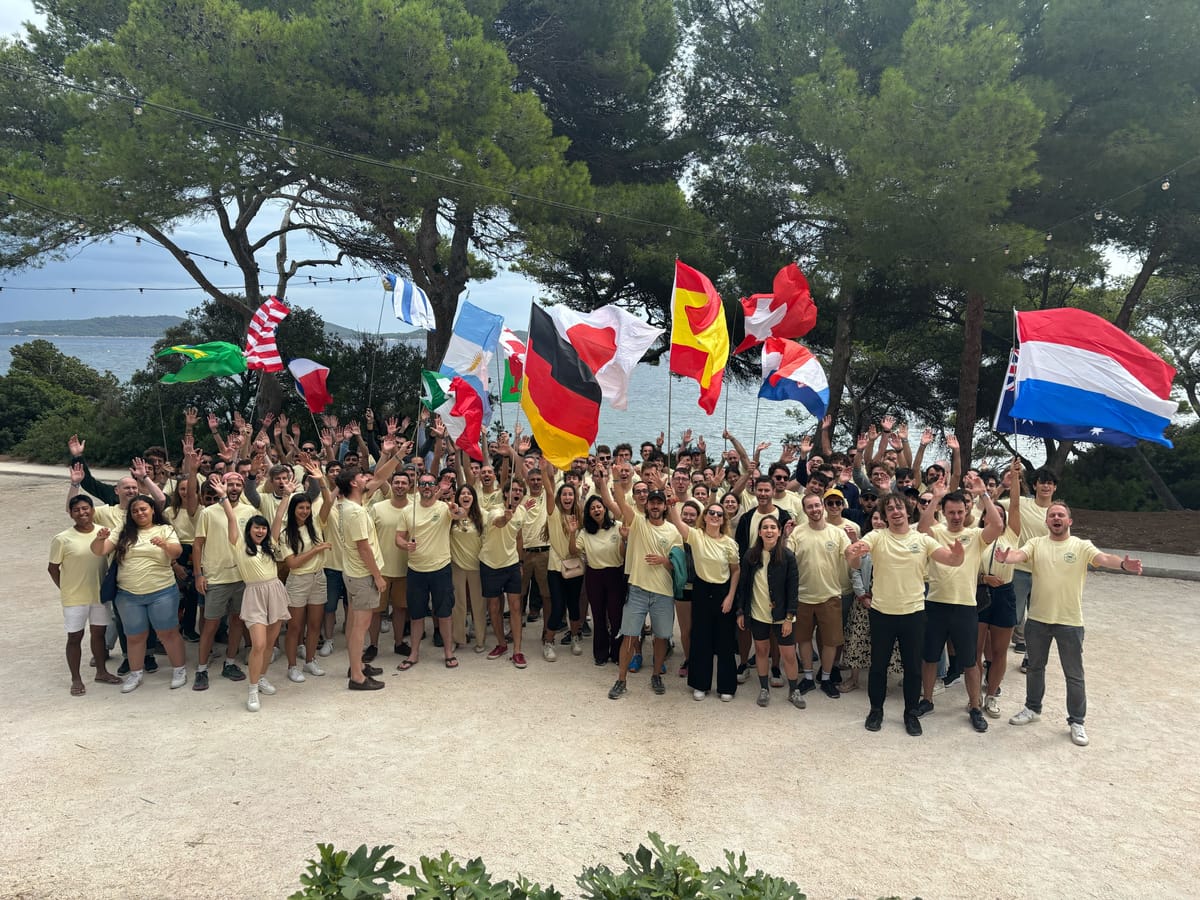
This collaborative foundation enables us to move quickly with confidence. We already deploy our SaaS platform daily (and do a monthly release for our self-hosted customers), and we're pushing towards multiple deployments per day, backed by solid testing and monitoring.
To support this pace—and meet the expectations of our Enterprise clients as we've grown quickly, we're investing heavily in first-class observability. We want to detect issues before they become incidents, backed by actionable dashboards and intelligent alerting that cuts through the noise.
Everything we're doing is about shortening the path from idea to production, because the best way to learn is to ship. And we're building frameworks that turn previously complex tasks, like adding new scanning sources, into routine operations.
These are the challenges that excite us. If you're an engineer who enjoys collaborating with others to build scalable systems, working at the intersection of security and developer tools, and shipping things that matter, we have open positions year-round. And if you can't find a fit, send us a message, we'd love to hear from you (Jeremy our CTO says you can DM him on LinkedIn mentioning which of these challenges you would like to work on).