Breach explained

A collection of 60 posts

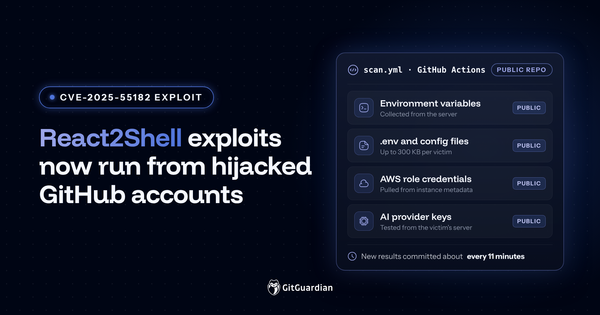
React2STEAL: Hijacked GitHub Accounts Exploit React2Shell and Publish Stolen Secrets

React2STEAL: Hijacked GitHub Accounts Exploit React2Shell and Publish Stolen Secrets

React2STEAL uses GitHub Actions in hijacked accounts to exploit React2Shell (CVE-2025-55182) on Next.js servers, then commits stolen environment variables, cloud keys, and AI API keys to public repositories. Patch, then revoke every secret the server could reach.

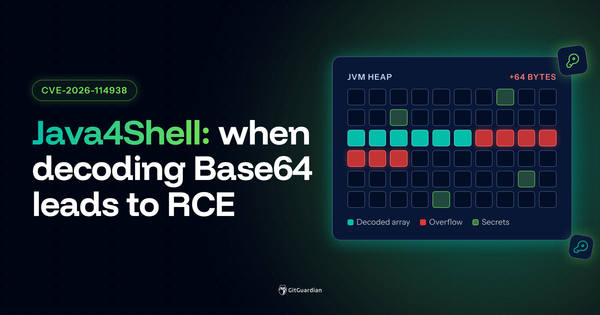
Java4Shell: When Decoding base64 Leads to RCE

Java4Shell: When Decoding base64 Leads to RCE

On November 17, 2026, OpenJDK and Oracle fixed Java4Shell. It may allow pre-auth RCE under default configurations. Exploitation was confirmed on identity, CI/CD, artifact repository, and collaboration applications. This kind of Java application stores credentials, so it can be a secret-theft vector.

wfx-loot: A CI Secret Stealer Pushed With Stolen GitHub Credentials

wfx-loot: A CI Secret Stealer Pushed With Stolen GitHub Credentials

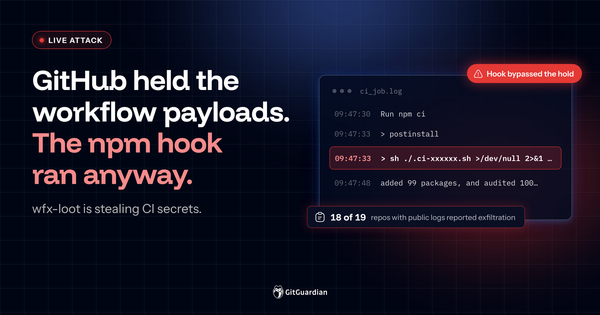
A threat actor used stolen GitHub credentials to push a CI secret stealer into more than 17,000 public repositories. GitHub held the malicious workflows. An npm hook got past the hold and ran. Here is how the bypass worked and what to rotate if you were hit.

The Agents Have Now Found Your Secrets On GitHub: ARTEX Is Abusing Public Secrets Right Now

The Agents Have Now Found Your Secrets On GitHub: ARTEX Is Abusing Public Secrets Right Now

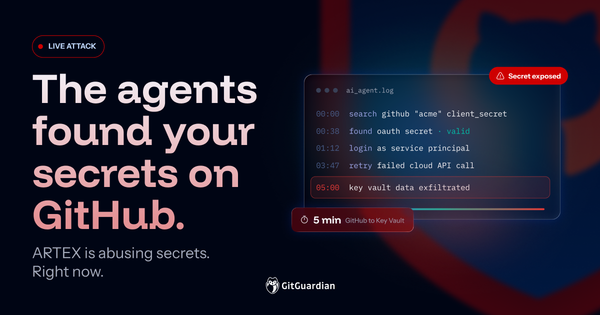
Microsoft Threat Intelligence caught attackers using an agentic AI framework, ARTEX, to hunt exposed secrets on public GitHub and move into Azure tenants in as little as five minutes. GitGuardian has tracked this attack path since 2017. Here is what changed, and four things to do today.

Responding to php2shell PHP Vulnerability When You Don’t Know What Secrets Are Deployed

Responding to php2shell PHP Vulnerability When You Don’t Know What Secrets Are Deployed

On Oct. 21, 2026, PHP fixed a vulnerability named php2shell by Calif. Pre-auth RCE under default configurations, confirmed on common CMS, webmail, e-commerce, file sharing, and database administration applications. A PHP server also stores and uses credentials, so this is a secret theft vector.