Non-human identities (NHIs) exist to perform the work that powers our applications. That work depends on access, and access, historically, depends on secrets.
A service account authenticates to a cloud resource. A token lets a pipeline deploy. A Kubernetes workload uses a connection URL to access a database. Our SaaS integrations communicate with other SaaS integrations securely via an API key.
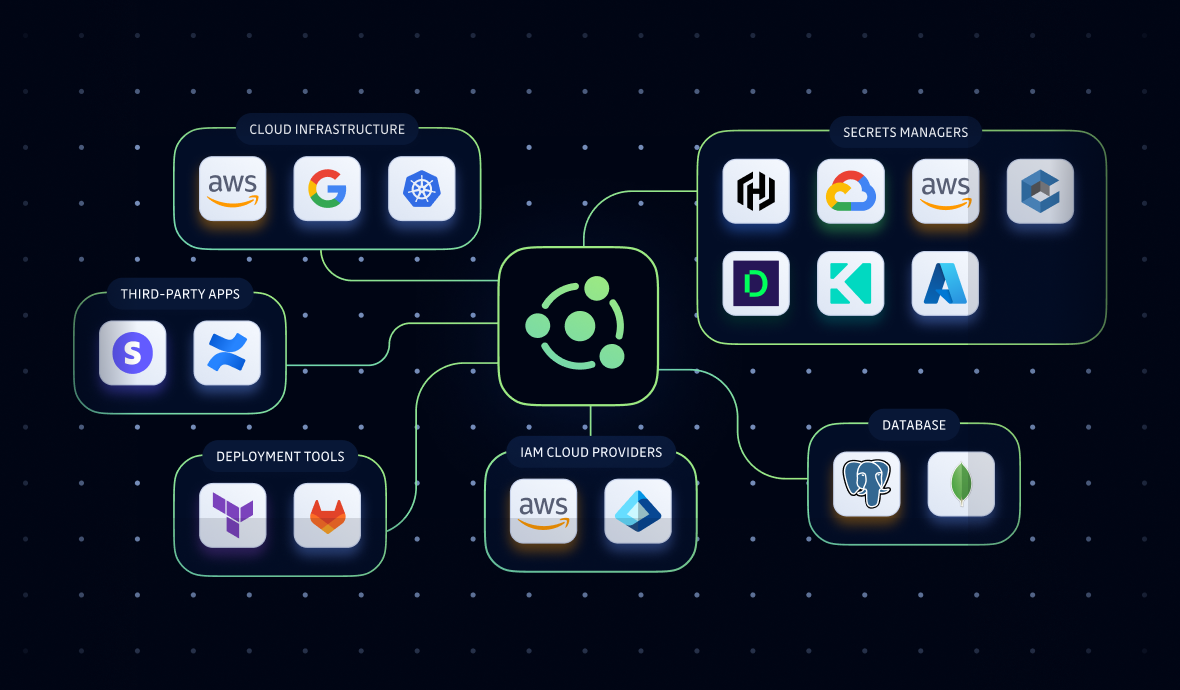
In most organizations, those identities are spread across more places than any one team can hold in their head. Some live in secrets managers. Others show up in continuous integration and continuous delivery systems, cloud identity and access management, Kubernetes, identity providers, and SaaS platforms.
The larger the environment gets, the easier it becomes for machine identities to drift out of sight.
IAM Owners Need a Living View
IAM owners need to understand what exists, where it lives, who is accountable for it, and its condition, all before and independent of whether anyone asks for an emergency rotation or an incident review.
That view is hard to maintain when non-human identities are scattered across secrets managers, CI/CD systems, Kubernetes, cloud IAM, identity providers, and SaaS platforms. Each system may tell part of the story. None of them gives IAM owners the full picture on its own.
GitGuardian NHI Governance starts with a secrets-first inventory view on the problem. It gives teams a centralized, searchable view of non-human identities across the whole infrastructure. Each NHI is surfaced with the source it came from, its path, the environment where it operates, its risk level, breached policies, and ownership status.
That shifts IAM work toward continuous governance. Owners can review the environment as it changes, spot drift earlier, and make better decisions about access, rotation, and remediation priorities. The goal is a current operating picture, not a scramble to reconstruct one after something goes wrong.
For IAM owners, the question becomes practical: which machine identities exist today, what can they access, what state are they in, and who is responsible for keeping them under control?
Visibility Is the Beginning of Governance
A complete inventory changes how teams work.
Instead of checking vaults, pipelines, and cloud consoles one at a time, teams can filter across sources, environments, risk criticality, and owners. Production, staging, development, and everything around them become part of the same view. That makes it much easier to see which identities exist, where they came from, and which ones need attention first.
Ownership Is Not An Optional Field
Every NHI has an origin story. A human created it, configured it, edited it, approved it, or introduced the secret that allows it to authenticate. Over time, that human context can disappear. An engineer leaves. A service changes hands. A token gets copied between systems. A credential keeps working long after anyone remembers why it was created.
That is how machine identities become orphaned infrastructure.
GitGuardian helps close that gap with NHI Ownership. Owners can be suggested automatically using signals from integrated sources, metadata tags, last editors, creators, and related secret incidents. Teams can also assign owners manually, including workspace members or external users by email.
The goal is simple. Every machine identity should have someone responsible for it.
Understanding NHI Risk
Most teams only discover their NHI problems at the worst possible moments. A credential expires and breaks production. A token appears in a public repository, and the incident reveals that a forgotten service account still has access to sensitive customer data.
With GitGuardian NHI Governance, risky patterns can be surfaced before they become a full-blown breach.
- Public leaks show where associated secrets have escaped the organization.
- Internal leaks show where credentials are more exposed than intended.
- Cross-environment secrets reveal credentials shared across production, staging, and development.
- Reused and duplicated secrets show where one credential appears across multiple vaults or systems.
- Long-lived secrets reveal credentials that have gone too long without rotation.
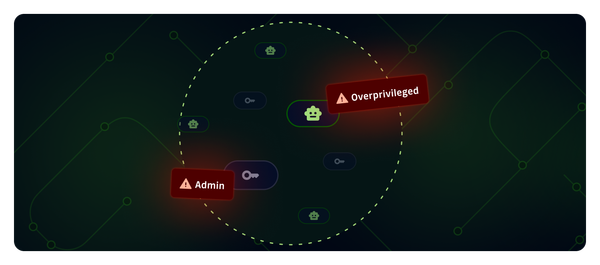
- Overprivileged Identities show where too much standing privilege has been issued, making these the most dangerous if an attacker can abuse their access.
These patterns are common in fast-moving environments. Infrastructure grows, and teams are shipping faster than ever. Governance often arrives later, if at all.
Teams need more than a list of secrets exposed in plaintext. They need the surrounding context that explains where an identity is used, how broadly it is exposed, and what risk it carries.
Context Lets Teams Act Quickly And Safely
Revoking or rotating a credential can reduce risk. It can also break something important when teams act without understanding dependencies.
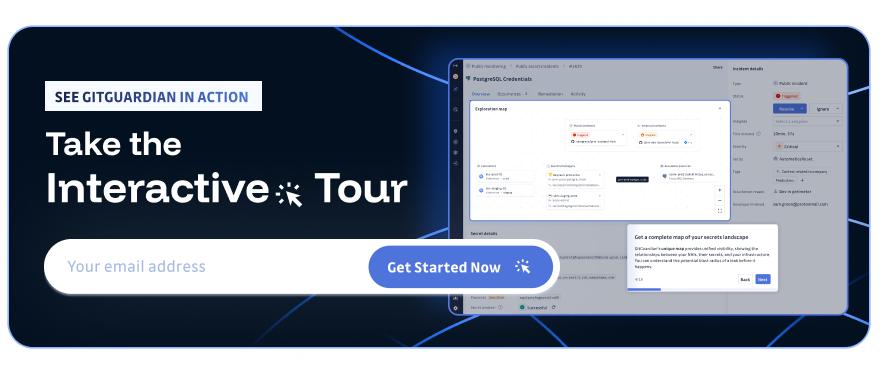
The exploration map in GitGuardian NHI Governance helps teams see how an NHI connects to secrets managers, consumers, and related incidents. That context gives responders a clearer picture before they revoke, rotate, or reassign a credential.
A service account might be consumed by multiple pipelines. A token might be duplicated across vaults. A secret might be tied to an active incident. Seeing those relationships changes the response from guesswork into planned action.
Bring NHIs Into Governance
Non-human identities have become part of the operating fabric of modern infrastructure. They deploy code, connect services, move data, and keep systems running. That access makes them useful. It also makes them risky when no one can see them clearly, understand their state, or name the person responsible for them.
GitGuardian NHI Governance helps teams bring those identities into view. It gives security, platform, and IAM owners a shared way to inventory NHIs, assign ownership, understand risk, and act with context.
The goal is practical governance. Know what exists. Know where it lives. Know who owns it. Know which identities need attention first.
Forgotten machine identities should never become the easiest path into your environment.
 Dwayne McDaniel