Inside the LiteLLM hack: 153GB, 433,909 Files, 2,488 Organizations
Attackers dumped everything they harvested from LiteLLM builds during a 40-minute window in March. Here is what is inside and what it says about where secrets live.

Cursor, Claude Code, and GitHub Copilot leave credentials scattered across config files, logs, and shell history that repository and CI scanners never see. Here's where that trail actually lives, and how to close it.
Docker Sandboxes isolate AI coding agents from the host. The GitGuardian Mixin Kit adds ggshield and AI hooks to scan prompts, tool actions, and outputs for secrets, giving developers a safer, repeatable path for agentic coding.
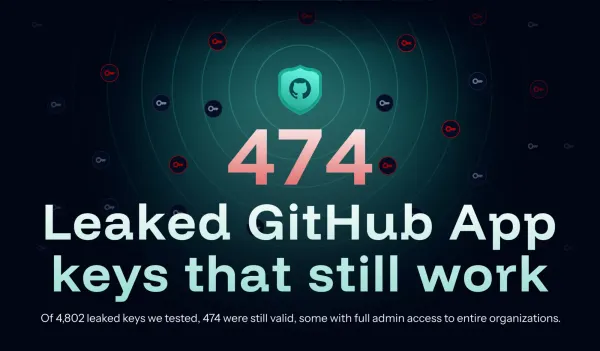
GitGuardian tested thousands of leaked GitHub App private keys and found 474 valid ones, some with admin access to entire organizations. CDC and BuildBuddy were among those affected. See the findings.
Recent campaigns show a consistent pattern: a supply chain attack compromises trusted software to reach the credentials held by developer machines and CI/CD pipelines.
AI agents are only as autonomous as the credentials behind them. This article talks about the Cloud Security Alliance's autonomy framework, why an agent's intended boundaries rarely match its actual access, and how GitGuardian helps close that gap through detection, remediation, and prevention.
A practical checklist for rotating service account credentials safely by assessing validity, leaks, permissions, consumers, vaults, copies, owners, and rollback.
Leaked credentials now reach public sources faster than any security team can review them by hand. GitGuardian Public Secrets Monitoring runs agents over every public incident and returns a comprehensive verdict.
Learn how the OWASP Top 10 CI/CD Security Risks map the modern software delivery attack surface, and why credential hygiene sits at the center of so many real-world failures.
Antivirus and EDR catch malicious behavior on a machine. Neither tells you which valid credentials are exposed on it right now. That's credential security, a distinct job that finds exposed secrets and helps fix them before attackers do.
S3 buckets have quietly become a credential blind spot: years of logs, backups, and pipeline output that nobody ever scans for secrets. In one 2025 incident (Sysdig), attackers reached admin access in eight minutes using IAM keys found in a public bucket.
AI agent threat response starts before runtime. See why pre-runtime credential controls stop agent misuse that runtime detection can only observe.
* The trick matters less than the access. Three 2026 disclosures, GitLost, Claude Code's CVE-2026-21852, and Amazon Q's CVE-2026-12957, show agent manipulation determines less damage than the credentials and permissions the agent can reach. * Secrets exposure keeps